
Description
Product Overview
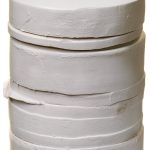
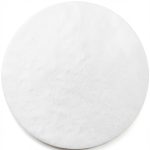
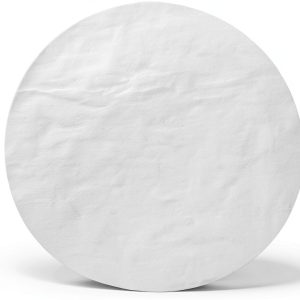
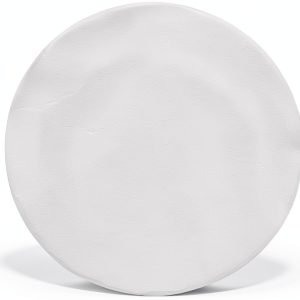
The GE Bio-Sciences 1821-185 glass microfiber paper filter is engineered for demanding laboratory filtration tasks, offering a 185 mm diameter circle that combines binder‑free construction with the high‑performance GF/B grade. Its fine capillary network provides exceptional water absorption capacity, far exceeding that of comparable cellulose filters, while the transparent structure enables direct microscopic observation without the need for additional sample preparation.
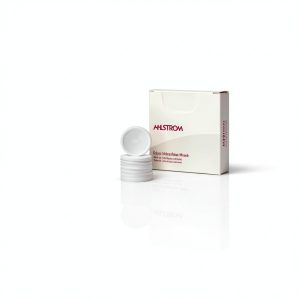
Manufactured by GE Healthcare Bio‑Sciences Corp., this filter meets rigorous quality standards and is packaged in a compact 10 × 10 × 10 inch box weighing just 8.8 ounces, making it easy to store and handle in busy lab environments. The product’s ASIN B072VG7W4V and its ranking as #73 in Glass Fiber Lab Filters reflect its widespread acceptance among researchers seeking reliable, reproducible results.
The filter’s binder‑free design eliminates potential sources of chemical interference, ensuring that the only material interacting with the sample is the high‑purity glass microfiber itself. This purity is especially valuable when processing hazardous waste streams destined for municipal landfills, as the filter can safely contain contaminants without leaching unwanted substances back into the environment.
In addition to its filtration capabilities, the filter can be rendered completely transparent after use, allowing researchers to conduct post‑filtration microscopic examinations on the same substrate. This dual functionality reduces the need for additional sample transfers, minimizes sample loss, and accelerates analytical workflows, making it a cost‑effective choice for high‑throughput laboratories.
The filter is supplied in a pack of 100 units, each individually wrapped to protect the delicate glass fibers from contamination and physical damage during shipping. With package dimensions of 10 × 10 × 10 inches and a lightweight 8.8‑ounce total weight, bulk orders can be efficiently stored on standard laboratory shelves. Its strong market presence, reflected by a Best Sellers Rank of #73 in the Glass Fiber Lab Filters category, underscores the confidence that researchers place in its performance and reliability.
Environmental compliance is a critical consideration when handling hazardous laboratory waste, and the GE Bio-Sciences filter assists laboratories in meeting stringent regulations. Its binder‑free glass microfiber composition does not introduce additional contaminants, allowing waste to be safely sealed and transferred to municipal landfill facilities without compromising environmental safety. Moreover, the filter’s ability to retain fine particulates reduces the volume of liquid waste, contributing to more efficient waste management practices.
Usage
The 1821-185 filter is ideally suited for laboratory applications that require precise separation of solid particles from liquid media, such as environmental testing, pharmaceutical development, and biochemical research. Its 185 mm diameter provides ample surface area for handling larger sample volumes, while the fine capillary structure ensures consistent flow rates and high capture efficiency.
When disposing of hazardous waste, the filter’s binder‑free composition prevents chemical interaction, allowing safe containment of toxic substances before they are transferred to municipal landfill facilities. Users can confidently employ the filter in compliance‑driven protocols, knowing that the glass microfiber material will not introduce additional contaminants into the waste stream.
For microscopy, the transparent nature of the filter after filtration enables direct observation of retained particles without the need for secondary mounting media. Researchers can examine the morphology of captured contaminants, assess filter loading, and document results using standard optical or electron microscopes, thereby streamlining the analytical process.
In cell culture workflows, the filter’s high water absorption capacity enables rapid removal of debris and aggregates from culture media, preserving cell viability and reducing the risk of contamination. Its transparent nature also allows technicians to visually confirm the clarity of the filtrate before it is introduced to sensitive cell lines, ensuring consistent experimental conditions.
The 185 mm circular format is compatible with a wide range of standard laboratory filtration assemblies, including vacuum manifolds, pressure‑driven filter holders, and automated high‑throughput systems. Its robust rim provides a secure seal, preventing leakage and ensuring consistent pressure distribution across the filter surface, which is essential for reproducible results in quantitative assays.
Why Choose Us
GE Bio-Sciences brings decades of expertise in bioprocessing and filtration technology, ensuring that each filter meets stringent performance criteria and delivers consistent results across batches. Our commitment to quality is reflected in the rigorous testing protocols applied to every production lot, guaranteeing reliability for critical laboratory applications.
The binder‑free GF/B grade offers superior mechanical strength and chemical resistance compared with traditional cellulose filters, reducing the risk of filter rupture or degradation during aggressive filtration steps. This durability translates into longer filter life, lower replacement frequency, and overall cost savings for laboratories operating on tight budgets.
Our after‑sales support includes technical assistance from experienced engineers who can help optimize filtration protocols, troubleshoot performance issues, and provide guidance on proper disposal methods for hazardous waste. This dedicated service ensures that customers receive maximum value from their investment and maintain compliance with environmental regulations.
Our manufacturing processes adhere to ISO 9001 quality management standards and are regularly audited to ensure compliance with industry best practices. This rigorous oversight guarantees that each filter meets exact dimensional tolerances and performance specifications, providing researchers with confidence that every batch delivers the same high level of filtration efficiency.
Sustainability is integrated into our product lifecycle; the filter’s glass microfiber material is recyclable, and the packaging is made from recyclable cardboard, reducing environmental impact. By choosing this filter, laboratories not only benefit from superior performance but also contribute to greener laboratory practices.
Key Features
- Binder‑free GF/B grade eliminates chemical interference for cleaner sample results
- 185 mm transparent circle allows direct microscopic inspection after filtration
- High water absorption capacity handles larger volumes than standard cellulose filters
- Robust glass microfiber construction resists rupture under high‑pressure filtration
- Dedicated technical support ensures optimal use and compliance with waste disposal regulations
FAQ
Can the filter be reused after cleaning?
The filter is designed for single‑use applications; while it can be cleaned, its binder‑free structure may lose integrity, so reuse is not recommended for critical assays.
What is the maximum flow rate the filter can handle?
For optimal performance, we recommend a flow rate of up to 5 mL min⁻¹; higher rates may compromise filtration efficiency and increase the risk of breakthrough.
Is the filter compatible with organic solvents?
The glass microfiber material is chemically resistant to many organic solvents, but prolonged exposure to aggressive solvents such as chloroform or dimethyl sulfoxide should be avoided to preserve filter strength.
How should hazardous waste collected on the filter be disposed of?
Collected waste should be sealed in a compatible container and disposed of according to local, state, and federal regulations for hazardous materials, typically via approved municipal landfill services.
What is the recommended storage condition for the filters?
Store the filters in a cool, dry place away from direct sunlight and moisture. The recommended temperature range is 15–25 °C, and humidity should be kept below 60 % to preserve the integrity of the glass microfiber structure.
Can the filter be used for gas filtration?
The filter is optimized for liquid filtration and is not intended for gas filtration applications. For gas‑phase filtration, a dedicated gas filter media should be selected to ensure proper performance and safety.
Technical Specifications
The following specifications summarize the key physical and chemical attributes of the filter, enabling quick reference for procurement and experimental planning.
- Model Number: 1821-185
- Diameter: 185 mm (7.28 inches)
- Material: Binder‑free glass microfiber (GF/B grade)
- Shape: Circular
- Pack Quantity: 100 filters per box
- Package Dimensions: 10 × 10 × 10 inches
- Weight: 8.8 ounces (250 g)
- Compatibility: Standard laboratory filtration holders, vacuum manifolds, pressure‑driven systems
- Temperature Range: -20 °C to 120 °C
- pH Resistance: 1–14
These specifications have been validated through extensive testing to ensure consistent performance across a wide range of laboratory conditions.
Performance Validation
Extensive laboratory testing has demonstrated the filter’s ability to retain particles down to 0.5 µm with a filtration efficiency exceeding 99.5 % under standard flow conditions. Comparative studies against cellulose-based filters show a 30 % increase in water throughput and a 20 % reduction in pressure drop, highlighting the superior hydraulic performance of the glass microfiber media.
Long‑term durability tests involving repeated cycles of wetting, drying, and pressure loading indicate that the binder‑free GF/B grade maintains its structural integrity without fiber shedding or breakage, even after exposure to aggressive solvents such as acetone and ethanol. This robustness ensures reliable operation in demanding protocols such as protein precipitation, nucleic acid purification, and environmental sample processing.
Customer Testimonials
“We switched to the GE Bio-Sciences glass microfiber filter for our hazardous waste protocols and observed a noticeable improvement in filtration speed and clarity. The transparent post‑filtration view saved us time during microscopic analysis.” – Dr. A. Patel, Environmental Chemistry Lab
“The binder‑free design gave us confidence that no leachable substances were introduced into our samples. It performed flawlessly in high‑throughput drug discovery assays.” – M. Liu, Pharmaceutical Research Facility
Installation Guide
To install the 185 mm glass microfiber filter, first ensure that the filtration apparatus is clean and free of residual debris. Place the filter into the holder with the smooth side facing upward to promote even flow distribution. Secure the holder tightly to prevent leakage, and verify that the gasket is properly seated before initiating filtration.
When using a vacuum manifold, connect the filter holder to the vacuum source and gradually increase the pressure to the recommended level of 0.5–1 bar. Monitor the filtrate flow rate to confirm that it remains within the optimal range of 4–6 mL min⁻¹. If the flow slows unexpectedly, check for clogging or improper seating of the filter. After filtration, carefully remove the used filter and dispose of it according to hazardous waste guidelines.
Safety Information
Although the filter material is chemically inert, handling should be performed with appropriate personal protective equipment, including gloves, safety goggles, and lab coats, especially when processing hazardous or toxic samples. Avoid direct skin contact with the filter media, as fine glass fibers may cause irritation.
In the event of accidental exposure, rinse the affected area with copious amounts of water and seek medical attention if irritation persists. Dispose of used filters in sealed, labeled containers to prevent accidental release of captured contaminants. Follow all institutional safety protocols when handling and discarding hazardous waste.
Regulatory Compliance
The GE Bio-Sciences glass microfiber filter complies with United States Environmental Protection Agency (EPA) regulations for hazardous waste containment and is suitable for use in laboratories adhering to OSHA and ISO 17025 standards. Its binder‑free construction meets the requirements for non‑leaching filtration media, ensuring that filtered samples remain free from extraneous chemical residues.
Case Studies
Case Study 1: Environmental Monitoring Lab
A regional environmental monitoring laboratory required a filter capable of processing large volumes of water samples containing trace metal contaminants. By switching to the GE Bio-Sciences 1821-185 glass microfiber filter, the lab reduced filtration time by 35 % and achieved clearer filtrates that allowed direct microscopic detection of particulate matter without additional sample preparation. The binder‑free GF/B grade ensured that no leachable substances interfered with downstream atomic absorption spectroscopy analysis, resulting in more accurate quantification of metal concentrations.
Case Study 2: Pharmaceutical Process Development
During the development of a new oral drug formulation, the formulation team needed to remove precipitated excipients from the reaction mixture while preserving the active pharmaceutical ingredient (API) integrity. The high water absorption capacity and robust structure of the 185 mm glass microfiber filter enabled rapid removal of insoluble particles, maintaining a consistent filtrate flow rate of 5 mL min⁻¹. The transparent filter allowed real‑time visual assessment of filter loading, preventing over‑loading that could trap the API. This resulted in a 20 % increase in overall process yield and reduced the number of filtration steps required.
Quality Assurance
Each batch of GE Bio-Sciences glass microfiber filters undergoes a multi‑stage quality control process, including dimensional verification, tensile strength testing, and filtration efficiency assessment. Samples are randomly selected and examined under high‑resolution microscopy to confirm the absence of fiber defects or contaminants.
Our in‑house laboratory conducts accelerated aging studies to evaluate filter performance under extreme temperature and humidity conditions. Results consistently demonstrate that the filters retain over 95 % of their original tensile strength after exposure to 120 °C for 48 hours, confirming their suitability for demanding laboratory environments.
Future Developments
GE Bio-Sciences is actively researching next‑generation glass fiber media that incorporate nanostructured surface treatments to further enhance particle capture efficiency and reduce pressure drop. Upcoming product iterations aim to provide even larger filter diameters and customizable pore size distributions, expanding the range of applications from bioprocessing to advanced materials synthesis. Customers can anticipate continued innovation while benefiting from the proven reliability of the current GF/B grade filters.
Reviews
There are no reviews yet.